|
$$PLAIN_TEXT_PREVIEW$$
|
Monthly Chronicle of Local Events and Topics of Interest
If you can’t read the full newsletter, click "View in Browser" at the very top of this email. |
|
|
|
Topics This Month - Regenerative Agriculture Field Day Newsletter Refresh & Update Macroinvertebrate Identification Session July Household Hazardous Waste Collection Haehnle Sanctuary Monthly Workdays Invasive Species Spotlight …and more!!
|
|
Upcoming Events - June 18th - Regenerative Agriculture Field Day, Maple Crest Farm, from 10am to 2:30pm, RSVP and complete the pre-survey here, more information below! Each Friday in June - Grand River Farmers Market, in the Grand River Brewery Parking lot, from 9am to 2pm. Each Saturday in June - Grand River Farmers Market, at the River & Rail Food Hub, 137 W North St, from 9am to 2pm. June 6th - Recycling Jackson, 1401 N Brown Street, open from 9am to 1pm. Visit their Facebook or website for more information. June 18th - Haehnle Sanctuary Monthly Workday, from 9am to 12pm, volunteers wanted, more information below. June 23rd - Macroinvertebrate Identification Session, 211 W Ganson Street, starting at 10am, email me if interested, more information below. July 23rd - Household Hazardous Waste Collection #2, at the Jackson County DOT Lot on Chanter Road, from 1pm to 6pm, RSVP here, email me if interested in volunteering, more information below! Keep an eye on our events page on our website for the most up-to-date information!
|
Regenerative Agriculture Field Day
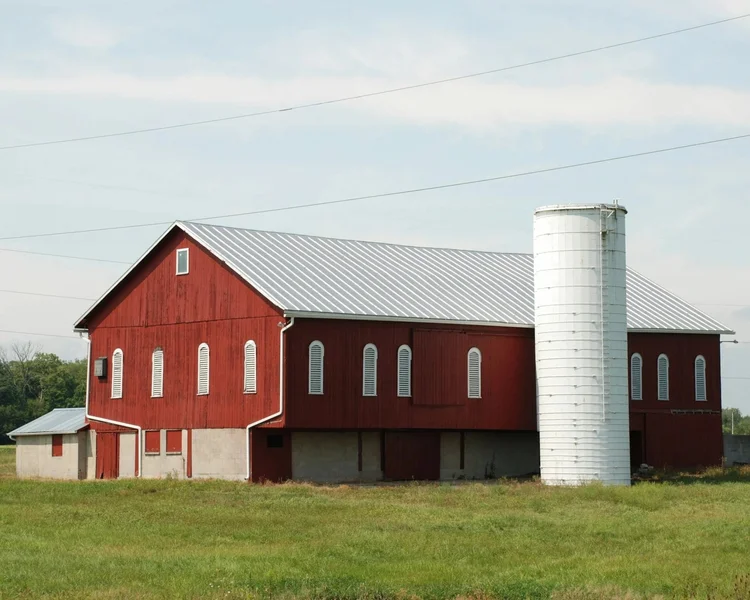
Southern Michigan Farmers!! Join the Jackson County Conservation District at Maple Crest Farm, 7654 Snyder Road, Rives Junction, MI, 49277, for a Regenerative Agriculture Field Day! |
|
|
|
|
Regenerative Agriculture Field Day Schedule: 9:00 Arrival, Check-in, & Networking 10:00 Maple Crest Farm Introduction 10:15 Splitting into 5 - 6 Groups for Rotational Stations 10:20 Rotational Station 1 10:45 Rotational Station 2 11:10 Rotational Station 3 11:35 Rotational Station 4 11:55 Lunch & Networking 12:30 Rotational Station 5 12:55 Rotational Station 6 1:30 Final Presentation - Brian Dougherty || Understanding Ag 2:00 Post Survey & Door Prizes 2:30 Depart
This event is free to Southern Michigan Farmers and includes lunch! Water, coffee, and light snacks are available throughout the duration. We will raffle off door prizes at the end of the event - items include soil probes, penetrometers, infrared soil thermometers and more.
RSVP and complete the pre-survey here! If you are planning to attend as a group, please have everyone fill out the RSVP individually to ensure an accurate headcount for lunch. Rotational Station Overview (approx. 20 minutes each): Greg Sanford of Maple Crest Farm will present evidence of the benefits of regenerative agriculture practices from his own operation. USDA NRCS District Conservationist, Jeffrey Lolkus & JCCD CTAI Technician, Darby Stipe will present the common constraints of depleted soil and the conservation practices to address these issues. JCCD CTAP Technician, Joselyn Ralph will demonstrate an on-farm soil health assessment. Regenerative Ag Field Coordinator, Dylan Arnett, will perform a slake test demonstration. MSU Extension Conservation Agronomist Educator, Madelyn Celovsky will perform a rainfall simulator demonstration. JCCD Biologist & JLW CISMA Coordinator, Shikha Singh, will present on the impact of invasive species on soil health and discuss strategies to increase biodiversity. After you have visited each station Bryan Dougherty of Understanding Ag will present a summary of how to start farming regeneratively and a rundown of the six core principals of regenerative agriculture. We have plenty of space left for this event and hope to see you on June 18th!
|

|
Newsletter Refresh & Update
We hope you enjoy the look of the same ole’ Conservation Corner! |
|
|
|
At the past few events in Jackson I’ve attended, I’ve heard from many of you that you don’t receive our newsletter, even though you’ve signed up. So, we’ve switched over to Squarespace to send out our monthly Conservation Corner to try to fix it! We’ve migrated the old mailing list from our previous newsletter platform over to our website. With that, some of you who may not wish to receive info from us might get this email - I apologize for that!! If you do not want to receive updates from the JCCD, feel free to unsubscribe (scroll all the way down and click the unsubscribe button). We won’t feel bad and understand how hectic inboxes could get - if you received this newsletter and you’ve unsubscribed in the past, it wasn’t intentional to re-add you and we apologize! You can always come back later if you’d like.
|
Macroinvertebrate Identification Session
Help us identify the macroinvertebrates we collected at the last Adopt-A-Stream event! |
|

|
|
|
On May 9th, volunteers from BASF alongside JCCD staff collected a TON of macroinvertebrates from different sites along the Upper Grand River.
If collecting isn’t your style, what about identification? Join us on June 23rd at the JCCD office on 211 W Ganson Street to identify the species of macroinvertebrates we collected!
We’ll have microscopes, utensils, and dichotomous keys available to assist us in the identification process. If you’re interested in this event, stop out to the office at 10am on June 23rd!
If you have any questions, please email colten@macd.org.
|

|
Household Hazardous Waste #2 - Latex Paint Special!
The Jackson County Conservation District will host a Household Hazardous Waste Collection on Thursday, July 23rd, from 1pm to 6pm! |
|
|
|
The collection will be held at the Jackson County DOT in the lot on the corner of N. Elm and Chanter (next to the County Jail). PLEASE USE THE CHANTER RD ENTRANCE. This event is for JACKSON COUNTY RESIDENTS ONLY (proof of residency is required)! NO BUSINESS WASTE! RESERVATIONS ARE REQUIRED AND CAN BE DONE HERE! Participants must sign up for an available appointment slot to attend the event. Please review the available slots and click on the button to sign up. The cost is $20/vehicle (Please bring exact change or a check made out to "JCCD"). There may be additional fees for large volumes of fluids (>50 gallons). Latex paint WILL be accepted at this collection. Thank you to our partners at Recycling Jackson for making this possible.
Tires, electronic waste, radioactive materials and explosives WILL NOT BE ACCEPTED! For more information email colten@macd.org. Click here for a list of accepted items. (Latex and water-based paint is accepted at this collection!!) This collection has been made possible thanks to funding provided by Jackson County.
|
Haehnle Sanctuary Monthly Workdays
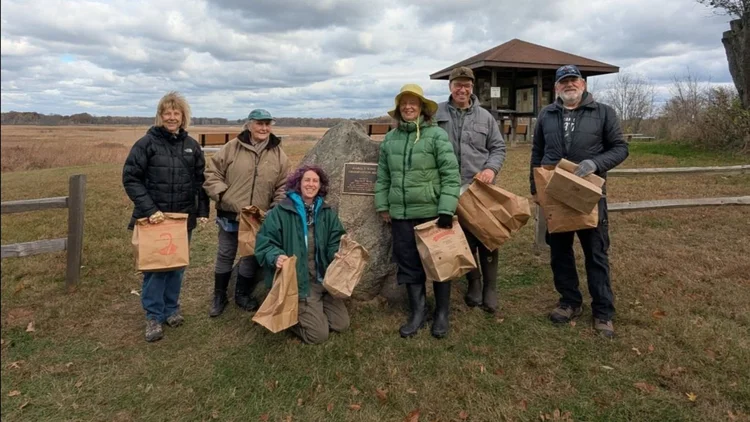
Seed Gathering at the Haehnle Memorial Sanctuary (Chad Machinski) |
|
|
|
|
Monthly workdays continue in support of habitat restoration and general maintenance. These are scheduled for the 3rd Thursday of each month. Chad Machinski from Michigan Audubon and Steve Jerant from Jackson Audubon will lead the work. Volunteers can assist from 9am to 12pm in the warm seasons and 1pm to 4pm in the cool seasons. Tools and materials are provided. Wear sturdy work boots. Registration is required so we are able to plan work type and location in the sanctuary. To register for the upcoming workday on June 18th, from 9am to 12pm, email jacksonaudubon@gmail.com. Haehnle is located at the intersection of Seymour Rd & Fairlane Dr, Grass Lake. Meet at the Wing Overlook kiosk on Seymour Road.
|
|
Invasive Species Spotlight
Japanese Knotweed
(Fallopia japonica) |
|
|
|
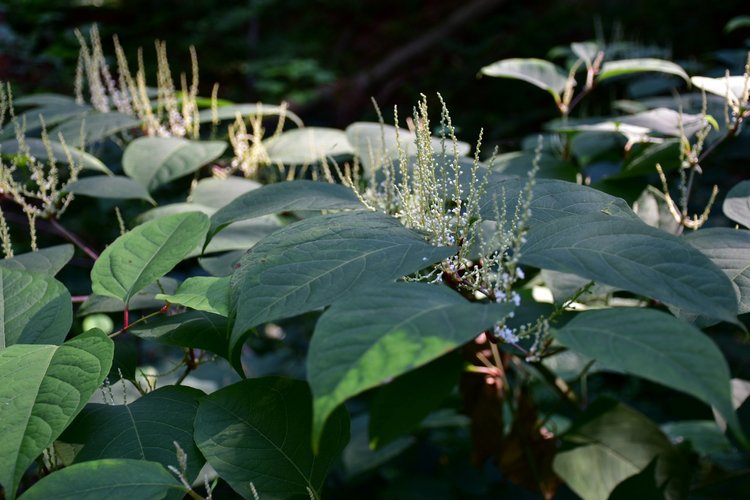
What is it? Japanese knotweed is a perennial herbaceous shrub originally from east Asia and is legally prohibited in Michigan. It has broad alternating leaves that have a pointed tip and upright hollow stems that are mottled in color. It can reach 3-10 ft. in height, has a deep tap root, and horizontal rhizomes (which can represent approximately two thirds of the plants weight!) that can grow up to 30 ft. away from the plant. In addition to seeds, knotweed can grow into a new plant via a small fragment of rhizome. Japanese knotweed can also hybridize with giant knotweed (Polygonum sachalinensis) to form Bohemian knotweed (both plants also being invasive). When they start (around September) flowering in Michigan, look for creamy white flowers!
How did it get here? Knotweed was introduced as an ornamental plant in the late 19th century, likely from the United Kingdom (where knotweed was introduced there in 1825). It was valued for its ability to grow quickly and ability to provide privacy and shade. It also gained popularity via social media where people foraged/grew it to eat the young shoots. It also spreads locally via contaminated mulch and compost, construction equipment, shared landscaping tools, and fragments being transported along river corridors.
What does it do? Due to its ability to spread quickly, they can shade out native plant species and create visibility issues along busy roads and sidewalks. If growing on slopes, erosion may occur when the stems die back. Rhizomes and roots can also exploit cracks and grow through walls, pavement, pipes, and drains!
What can you do? If you have a small infestation, you can try to dig out the plant if you think you can reach the entire root and all the rhizomes (and it hasn’t had a chance to spread laterally). You can use herbicide via stem injection, foliar spray, or wiping down leaves. Herbicide is more effective if applied at the end of summer while the plant still has green leaves. Depending on the size of the plant, some have used solarization to some degree of success (if one can completely cover the entire plant and all shoots). Knotweed management can take a few years of repeated treatment, and monitoring for regrowth should be done for at least five years.
If you find Japanese Knotweed in Michigan, note the location and take photos to aid in verification. Report your find to: Michigan Department of Agriculture and Rural Development, MDA-Info@Michigan.gov. Or - the Midwest Invasive Species Information Network (MISIN) online reporting tool. Or - download the MISIN smartphone app and report from your phone.
Check out these sites to learn more about invasive species: If you have a smartphone, download the MISIN (Midwest Invasive Species Information Network) App. This will allow you to learn about invasive species and report them on your phone. If you have any questions about invasive species, contact the JLW CISMA Coordinator Shikha Singh via email (shikha.singh@macd.org) or call the office at 517-395-2089. Don't forget to check out the official JLW CISMA website here. Click here to sign up for the JLW CISMA monthly newsletter.
|
Soil Testing at the JCCD!
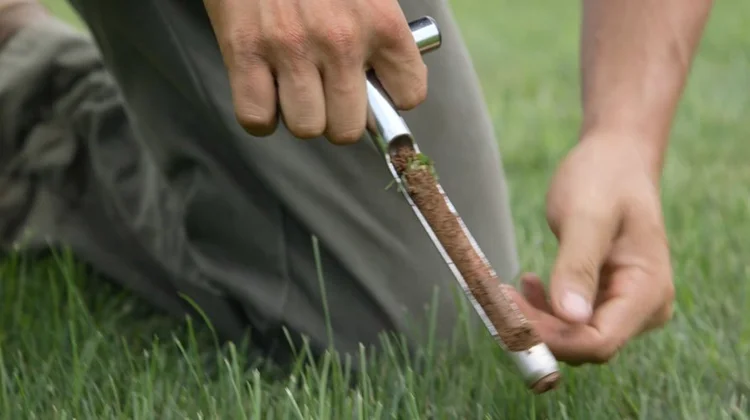
Soil testing will tell you about the nutrients in your soil and allow you to best care for your plants. |
|
|
|
|
Soil testing information can help you develop a proper fertilization strategy and prevent over-fertilizing. Test results will include lab recommendations and consultation with JCCD staff, if needed, to answer questions you may have. Soil sample materials and information are available at the district office at 211 West Ganson Street, Suite 200 in Jackson. The cost is $25/sample for one to four samples or $20/sample for 5 samples or more. Free soil probe rental is also available by appointment. Contact Joselyn via email at joselyn.ralph@macd.org or call 517-395-2082 with questions. You can also visit our website or Facebook page for more information about the Conservation District.
|

|
Hunting Access Program HAP provides access to quality private hunting lands with a focus on agricultural regions and disease management areas. |
|
|
|
Michigan's Hunting Access Program (HAP) was originally created in 1977 to increase public hunting opportunities in southern Michigan where 97 percent of the land base is privately owned. It has now expanded to include the Northeast Lower and Eastern Upper Peninsulas. HAP is one of the oldest dedicated private lands public access programs in the nation. HAP provides access to quality private hunting lands with a focus on agricultural regions and disease management areas. Providing more hunting opportunities is critical for attracting new and retaining current hunters and supporting Michigan’s strong hunting tradition. Click here to find a list and maps of HAP properties around the state. HAP provides financial incentives to private landowners who allow hunters access to their lands. Using funds from a USDA/VPA-HIP federal grant, the DNR has significantly expanded the number of acres and properties available within the HAP program. Click here if you are interested in finding out more information on how to enroll your land in the Hunting Access Program. The Jackson County Conservation District participates in HAP, if you are interested in learning more about the property, please email colten@macd.org. This information was taken directly from the Michigan.gov website.
|
Recycling Jackson
Recycling Jackson’s purpose is to help provide a clean, healthy environment in Jackson County through Recycling. |
|

|
|
|
Recycling Jackson provides recycling drop-off on the first Saturday of every month from 9 am-1 pm. They are located one block behind Home Depot next to the Jackson Public Schools Bus Garage at 1401 N Brown St. Find out more information on their Facebook page or website. Latex paint is now accepted! Paint must be in a good container; must be liquid; must be latex paint. See this Facebook post for further details and materials they do not accept.
|
|
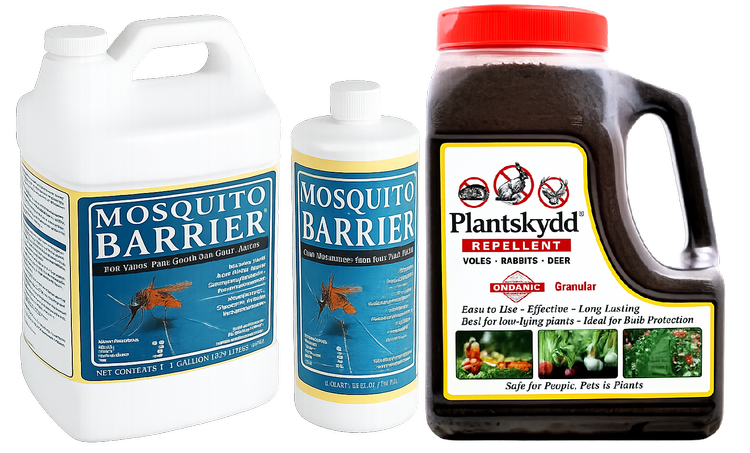
Products For Sale at the JCCD The Conservation District office has both Plantskydd & Mosquito barrier for sale! |
|
|
|
Plantskydd is a 100% all-natural animal repellent for use around your trees, shrubs, garden, or farm. The active ingredient is blood (recognized by the EPA as a safe ingredient exempt from pesticide registration). How does it work? Plantskydd repels by emitting an odor that browsing animals, such as deer and rabbits, associate with predator activity. The odor is not unpleasant to applicators or planters. Is it safe? Plantskydd contains no synthetic additives, is non-toxic, and is not harmful to animals or the environment when used as directed. Powder Concentrate
1.1 pound - $32
2.2 pounds - $53 Pre-mixed
1 quart - $23
1.3 gallons - $64 Granular
3-pound shaker jug - $33 Mosquito Barrier is effective against mosquitoes, ticks, and black flies. It is safe for humans, plants, and pets and lasts up to a month with each application. The effective ingredient is garlic, and the odor dissipates immediately after application. Mosquito Barrier
1 quart - $26.50 (covers 1.25 ac.)
1 gallon - $82 (covers 5 ac.) Please call 517-395-2082 or email colten@macd.org to schedule an appointment to purchase and pick up your Plantskydd or Mosquito Barrier!
|
|
Check out our website and Facebook to stay up to date with our latest news and events!!
|
|
|
|

